


Did Radio Surrender Its Greatest Competitive Advantage?
 • ABC’s prerecorded newscasts are making headlines, but they’re not the real story. They’re simply the latest example of an industry that forgot its greatest asset wasn’t music or news… it was people.
In his latest thought-provoking RAMP op-ed, longtime broadcaster Kevin Gershan argues that radio didn’t lose listeners to streaming; it surrendered its greatest competitive advantage: its humanity.
” The outrage over ABC News Radio‘s use of prerecorded overnight newscasts misses the larger story. Whether those broadcasts represented two hours a week or twenty is almost beside the point. The real issue isn’t technology or budgets. It’s trust.
For more than a century, radio made an extraordinary promise. Somewhere, at every hour of every day, there was another human being awake with you. That promise built an industry. Listeners didn’t merely tune in for information. They tuned in for companionship. The announcer knew their town. The news anchor interrupted programming when history happened. The morning personality celebrated the local high school’s football championship. The afternoon jock warned about the traffic accident before anyone else. The newsroom wasn’t simply reporting events; it was sharing life with the community in real time.
Radio’s greatest competitive advantage was never that it played music. It was that it was alive. The debate surrounding prerecorded newscasts merely illustrates how far the industry has drifted from the very qualities that once made it indispensable.
For decades, radio executives have insisted their greatest competition was another radio station. It wasn’t. It was loneliness. It was uncertainty. It was the need to know what was happening right now. Radio won because it was immediate, unpredictable and profoundly human.
Then came deregulation. The Telecommunications Act of 1996 was intended to unleash competition. Instead, it unleashed consolidation. Hundreds of owners became dozens. Dozens became a handful. The promise of scale gradually became an obsession with efficiency. Stations that once competed by sounding different began sounding identical. Research replaced instinct. Voice tracking replaced personalities. Shared playlists replaced local music directors. Regional programming replaced hometown programming. The accountant slowly became more important than the program director. The lawyer slowly gained more influence than the news director. Eventually the spreadsheet outranked the audience. Wall Street rewarded quarterly savings while listeners quietly disappeared.
Ironically, this happened at precisely the moment radio needed to become even more local. The arrival of streaming, podcasts and personalized music services should have pushed broadcasters toward the one thing those platforms could never duplicate…Community. Spotify can recommend songs. It cannot broadcast a tornado warning specific to your neighborhood. Apple Music can create the perfect playlist. It cannot interview your mayor. A podcast can accompany you whenever you choose. It cannot react when a bridge collapses fifteen minutes ago. Algorithms can predict your taste. They cannot attend your town council meeting.
Radio should have doubled down on being the place where a community talked to itself. Instead, much of the industry attempted to imitate technologies that would always do those jobs better. Music stations increasingly became automated jukeboxes competing against infinite jukeboxes. News and talk stations often abandoned local conversations in favor of syndicated programming that could originate hundreds or thousands of miles away. National voices certainly have an important place. They always will. But twenty-four hours of national programming cannot replace a host who understands the rhythm, concerns and personality of a particular city.
Every great radio station once reflected its hometown. Too many today merely reflect a corporate programming strategy. The tragedy is that none of this was inevitable.
Imagine a different version of the last thirty years. Imagine ownership groups using their new scale not simply to reduce expenses but to fund extraordinary local journalism. Imagine building digital platforms around beloved local personalities rather than replacing them. Imagine investing in investigative reporters, neighborhood correspondents, community events and talent development while streaming services fought over music catalogs. Imagine contests so creative people talked about them at work the next day. Imagine newsrooms becoming faster because technology made them better, not smaller. Imagine every station asking one simple question before making every programming decision:
“What can we provide that no app can?” That answer was never another playlist. It was another person.
The prerecorded newscast controversy is not the beginning of radio’s decline. It is simply another reminder of what happens when an industry slowly forgets what business it was really in.
Radio was never merely transmitting audio. It was creating relationships. The medium didn’t lose because Americans stopped wanting companionship, immediacy or community. Those desires have never been stronger. The medium lost ground because too many executives came to believe radio was selling inventory when, in fact, it had always been selling something infinitely more valuable…Presence. The remarkable thing is that this story doesn’t have to end here. The technology exists. The talent exists. The audience still exists.
What remains uncertain is whether the industry has the courage to stop asking how inexpensively it can operate radio and begin asking how indispensably it can serve the people who still invite it into their lives every single day.
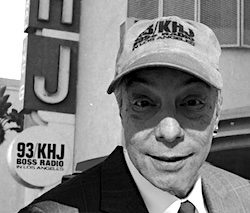 • Kevin Gershan is a former Producer/Director of Entertainment Tonight and Director of Creative Music Strategy for CBS Media Ventures. He also oversaw all the interstitial radio content for CBS Media Ventures, including the ET Radio Minute, Inside Edition: Inside Report, Ask Dr. Phil, The Doctors Orders and Rach On The Radio.
Prior to that he worked at KIQQ (K-100), KMPC 710-AM (including during its switch to All Sports in 1992), KMGG (Magic 106 FM) and K-EARTH 101/Los Angeles.