

‘It’s About Time!’
 What Radio Taught Me About Life
 What Radio Taught Me About Life
— A RAMP Guest Editorial by Kevin Gershan
There may not be another profession that has a more intimate relationship with time than radio. Not doctors. Not airline pilots. Not trial lawyers.
Broadcasters.
Long before we ever stop to wonder why the years seem to pass faster as we grow older, we’ve already spent decades measuring life in seconds instead of minutes. We know the feel of a song intro before the vocal starts. We can backtime into a network newscast without thinking. We know whether there’s enough time for one more weather tease before the legal ID, whether a :30 commercial is really going to take :34, and whether a three-minute-and-twenty-five-second record buys enough time to grab a fresh cup of coffee, make a quick stop at the restroom, exchange a few words in the hallway and still stroll back into the studio in time to hit the post without breaking a sweat.
Broadcasters don’t wear watches because they don’t know what time it is. They wear them to confirm what they already know. Eventually, we stop looking at the clock.
We start feeling it.
Then there are the rituals only we understand.
Most of us have ridden in a car with someone who’s wondered why we turned the radio down while the song was playing, only to crank it right back up just before the jock started talking. We didn’t need to hear the record. We wanted to hear how they hit the post, how they handled the segue, whether they nailed the intro, whether they left just enough room for the vocal and whether they somehow found one more second nobody else knew was there. We listened to the personality every bit as much as the music.
That’s when it hits us.
We really do have an obsession with time.
It comes with the job.
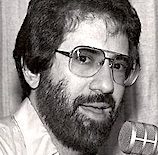
One of the great privileges of my career was spending time around Robert W. Morgan. If you knew Robert, you also knew his trademark greeting, “Good Morgan!” It fit him perfectly because he seemed to understand mornings, music and timing better than just about anyone who ever sat behind a microphone.
One “Good Morgan” on KMPC, during the station’s Great American Songbook years, Robert was introducing Jo Stafford’s You Belong to Me. He closed with, “Jo Stafford… on KMP…” and stopped. A split-second later Stafford sang, “…See the pyramids along the Nile,” effortlessly completing “KMPC” with the word “See.” It lasted less than a second. Most listeners probably smiled without realizing why. Every broadcaster listening knew they had just heard a master hit the post in a way only Robert W. Morgan could.
The Real Don Steele possessed that same gift. He knew exactly how long to let the legendary “Fractious Friday Sign-Off” ride over You Can’t Sit Down before asking, “What do we know and believe?” Then came that perfectly timed beat before the mystery woman’s unforgettable reply, “Tina Delgado is alive… alive!”
Dan Ingram understood exactly how long a pause could hang before it became funny. Larry Lujack knew silence wasn’t dead air, it was another instrument. Wolfman Jack could stretch fifteen seconds into a minute simply by changing his cadence. CKLW’s Big Jim Edwards could make every countdown sound as though time itself was holding its breath.
They worked in different cities, on different stations and for different owners, yet they all possessed the same remarkable gift.
They didn’t just know what time it was.
They knew what time felt like.
Watching those masters eventually led me to think about something that has nothing to do with radio and everything to do with life.
For years I’ve been fascinated by why time seems to speed up as we grow older. Then I came across an idea that has stayed with me ever since. Psychologists refer to it as the proportional theory of time perception, and while it’s only one of several competing explanations, it may also be the most intuitive.
Think of your life as an old Top 40 hot clock, the circular programming wheel every Program Director seemed to carry around in one form or another. Your first year occupies the entire clock because it represents one hundred percent of everything you’ve ever experienced. By the time you’re two, that second year fills half the clock. At three, it occupies one-third. At four, one-quarter. By the time you’re ten, each passing year occupies only one-tenth of the clock. Reach fifty and another year becomes just a tiny sliver. By seventy, it’s barely visible.
The clock itself never changes. The circle is still the same size. What changes is how much of it each new year occupies.
Maybe life has its own hot clock.
The clock on the studio wall measures time. The hot clock measures how we use it. Maybe that’s true of life, too.
Whether the proportional theory is exactly right almost doesn’t matter. Other psychologists believe novelty is the real key. Childhood is filled with firsts: first bicycle, first concert, first kiss, first apartment, first paycheck, first day on the air. Those experiences create vivid mental bookmarks. As life settles into familiar routines, there are simply fewer new bookmarks, causing months and years to blur together in memory. Others believe our brains literally process time differently as we age. They may all be right. But whichever explanation you find most convincing, the feeling itself is universal.
We’ve all lived it.
When we were kids, “Hot Fun in the Summertime” felt like it actually lasted all summer. Today, summer arrives around Memorial Day, waves hello and, before you know it, Hall & Oates had it exactly right with “Did It in a Minute.”
Somewhere along the way, the carts disappeared. Then the turntables. Then the request lines. The intern became the Program Director. The weekend kid we hired is celebrating a twenty-fifth anniversary. The station we were certain would always be Top 40 is now Classic Hits.
The songs are exactly the same length they were forty years ago.
We’re the ones who changed.
Maybe that’s why the old saying, “Time flies when you’re having fun,” never quite told the whole story. Maybe time flies because every passing year becomes a smaller and smaller percentage of the remarkable journey we’ve already lived.
The irony is that radio taught us to measure time with extraordinary precision. We know intros, stopsets, quarter-hours, network joins and exactly how long we have before the vocal starts. We know when to hit the post, when to leave room for the network and when to let a moment breathe. Yet somewhere along the way I began to suspect that life isn’t asking us to become better timekeepers.
It’s asking us to become better memory makers.
The broadcasters I’ve admired most never stopped collecting firsts. They learned new technology instead of complaining about it. They mentored young talent instead of competing with it. They traveled. They stayed curious. They kept finding reasons to be surprised because every new experience added another bookmark to the story of their lives.
Looking back, maybe Robert W. Morgan had it figured out all along. He couldn’t slow the clock any more than the rest of us. None of them could. But they all understood something that took me years to appreciate.
After all these years, I still find myself listening for the post.
The difference is, I’ve finally realized the most important one isn’t in the next record.
It’s in the life we’re living before the vocal starts.
• Kevin Gershan is a former Producer/Director of Entertainment Tonight and Director of Creative Music Strategy for CBS Media Ventures. He also oversaw all the interstitial radio content for CBS Media Ventures, including the ET Radio Minute, Inside Edition: Inside Report, Ask Dr. Phil, The Doctors Orders and Rach On The Radio. Prior to that he worked at KIQQ (K-100), KMPC 710-AM (including during its switch to All Sports in 1992), KMGG (Magic 106 FM) and K-EARTH 101/Los Angeles.